Brass work can take many different shapes & forms. What are we to do if dent work causes the material to be worn thin enough to puncture? So far it’s been easy with porting & learning to solder, but today we finally get into basic metal shaping!
Band instrument repair is not one skill, but rather a collection of many skills to improve on & development over the course of your career. No matter what may be wrong with a project, how much or how little work must be done, it is imperative we continue to do our best work every time.
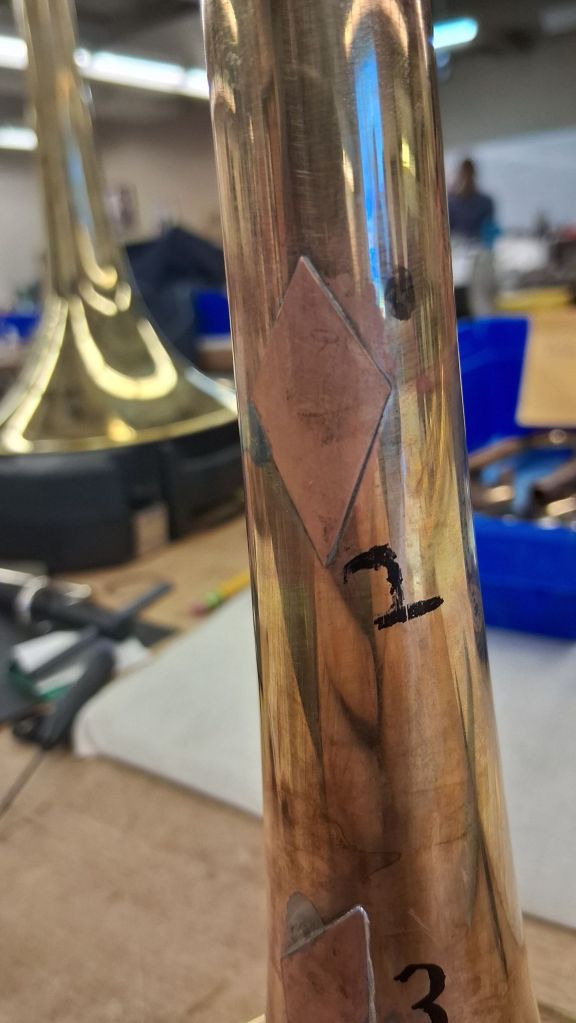
Personally, I feel like patchwork is what separates the repair technicians from hobbyists. There is so much that goes into a patch, certainly more than I had initially been led to believe. Patches have to be symmetrical on all four sides, so they should resemble a rhombus more than a kite.
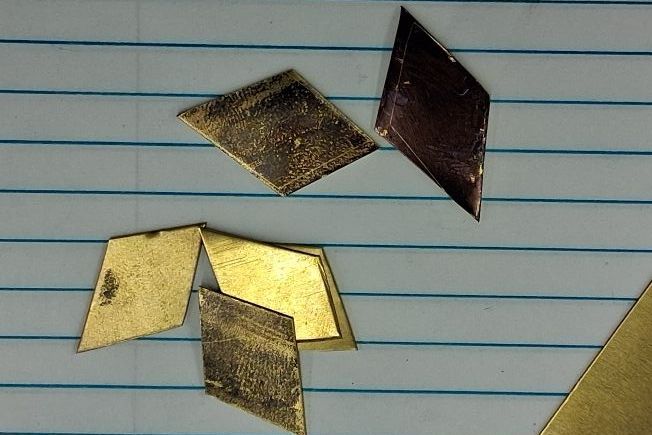
When I began this project, I was NOT good at creating patches. I went through an entire business card just trying to get the template perfect. If the template is off, then every patch I trace & draw will be off.
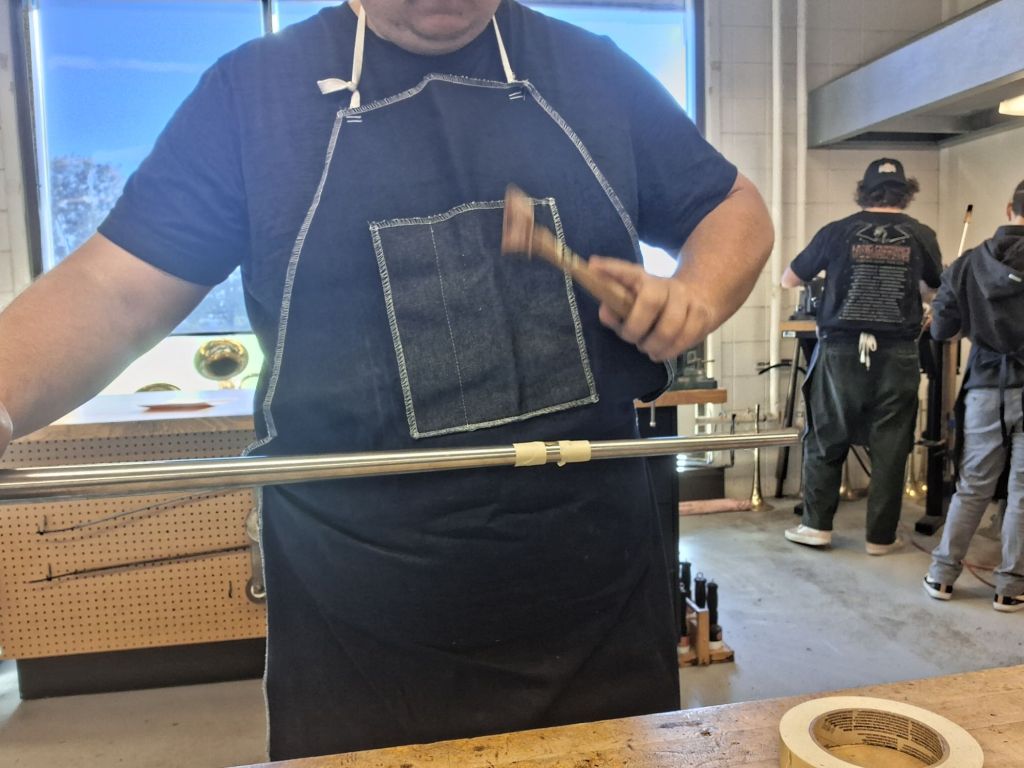
You can use masking tape to hold the brass patch in place. This is especially useful for when you don’t want to bash your fingertips repeatedly!

They say you’re either good at soldering or good at clean-up! Above all else, try your absolute best not to get solder on the top of the patch! That will be hard (not impossible) to touch buff. I had to do that on some of my practice patches.

Patchwork serves as a good introduction to shaping brass. We will be getting to dent work soon & that post will include a lot of information, including shimming!

 DM Band Instrument Repair