Over the last few months, I have detailed a variety of processes on the brasswind repair side, as well as some tools with their respective functions. You might be wondering: “What would be the most important aspect to remember about working on an instrument?” Many good answers could apply & be correct; however, the answer I’m looking for is simple: Never work on a dirty horn!
We often find ourselves working with a wide variety of chemicals, some definitely more harmful & caustic than others! As a result, we must make sure we are knowledgeable on what surrounds us.
Bench chemicals
First, let’s learn what chemicals we have at an arm’s reach away & what their use is:
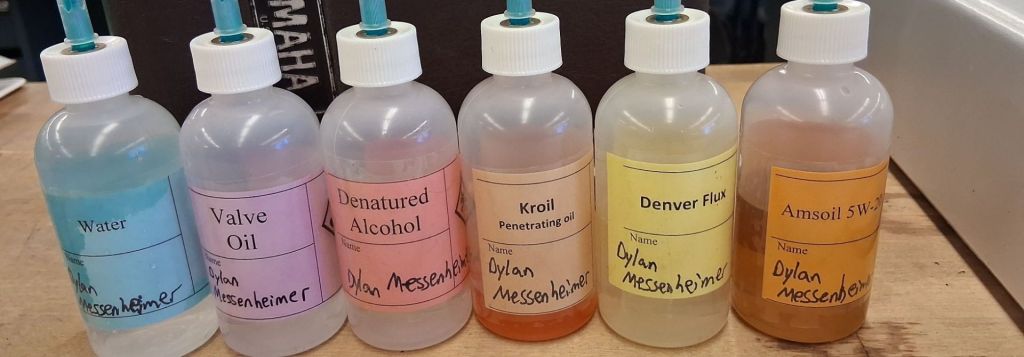
- Water — Basic tap water used in anything from cooling down parts to ironing flute pads.
- Valve oil — Used to lubricate valves & wipe the instrument of buffing compound.
- Denatured alcohol — Used in the wiping process & occasionally during casing dent work.
- Penetrating oil (Kroil) — Used to help remove stuck slides.
- Denver Flux — A brand of flux used for the purposes of soft soldering.
- Amoil 5w-20 — Oil to keep our tools healthy in the conditions of the shop!
We keep a good spread for various functions, many of which aren’t listed but will be covered within future updates.
The Chem Room
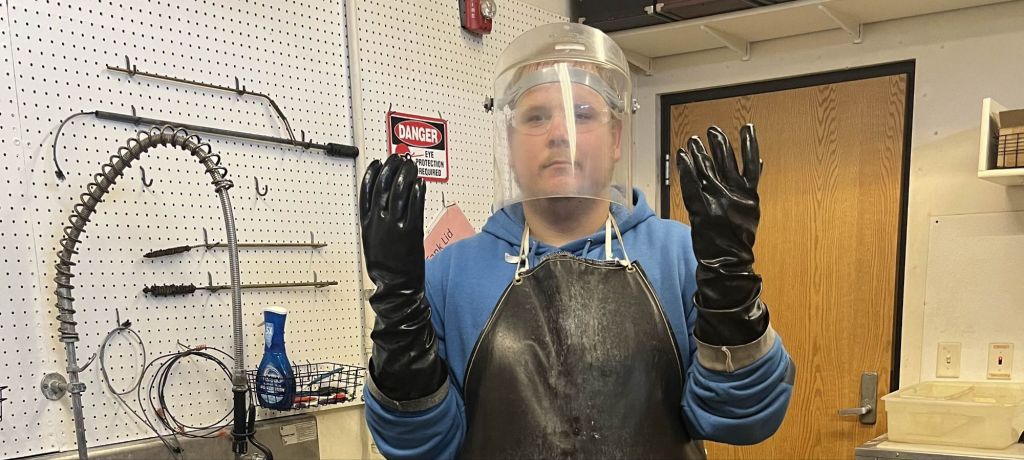
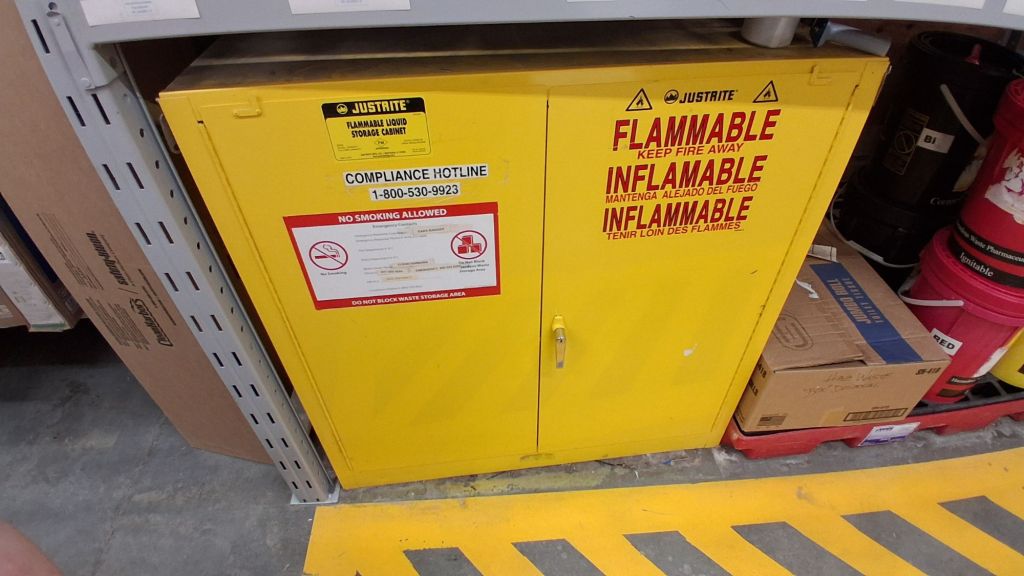
Safety is no laughing matter, especially when in the chemical room. Everything has a place & function for the cleaning process. We ensure our fellow associates are caught up on their Safety Data Sheets (SDS) & where they are kept, as well to keep an accident-free work space. Accidents may occur, but we can do our best to minimize the chances, especially when chemicals are involved!
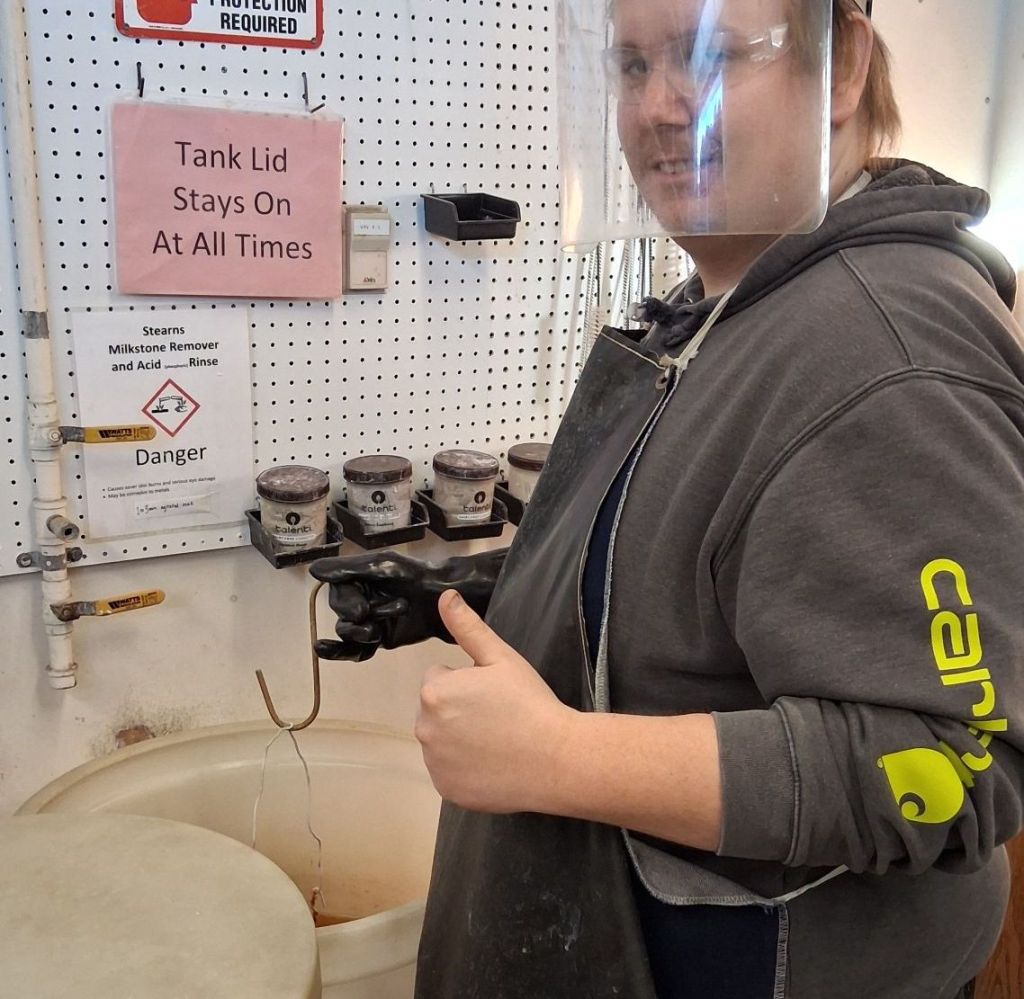
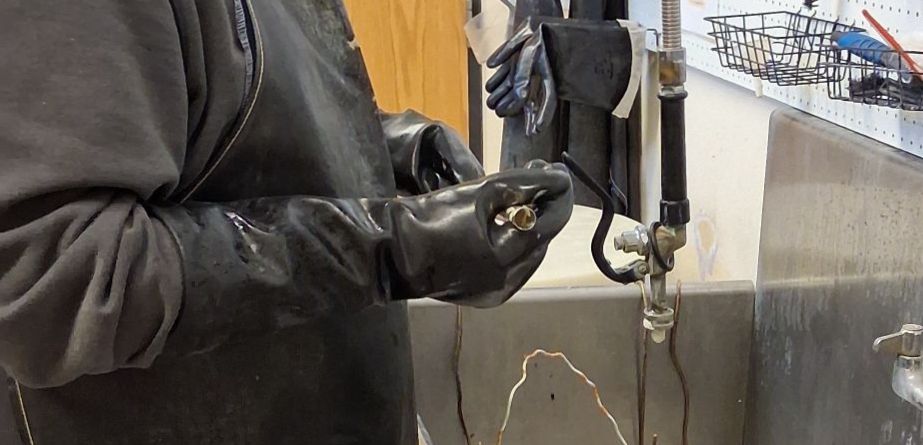
Many instruments will not require the use of an ultrasonic cleaning tank (I did not get to use one). We typically do an agitated soak in a solution known as “Industry Purple” for about 5 to 15 minutes. This is a diluted solution of purple Zep industrial degreaser (similar to the cleaning solution used in commercial restaurants). This is followed by a much shorter agitated soak in acid for 1-3 minutes. The temperature for rinsing off the chemicals varies. Cold water rinse for industry purple, & a warm rinse after the acid soak.
Don’t forget to stabilize after soaking! It is important to also ensure we stabilize the bearing surface of slides after soaking with the shop’s best practice, however yours may say!
Next update we will get into dent work on brass. The fundamentals being posted will inform for the major project: The Holton Trumpet Overhaul!

 DM Band Instrument Repair