Another main aspect to brasswork & the most common type of repair for brasswinds takes the form of dent work. Dents can happen anywhere on the instrument, but not all dents are made equal & require or necessitate repair. Regardless, it is our job to ensure a great job is done. Remember: great work instills trust from our clients! Refer to your shop’s policy on functional dent work. As time progresses, you’ll learn & understand which dents in what areas affect sound in however many ways.
Types of Dents
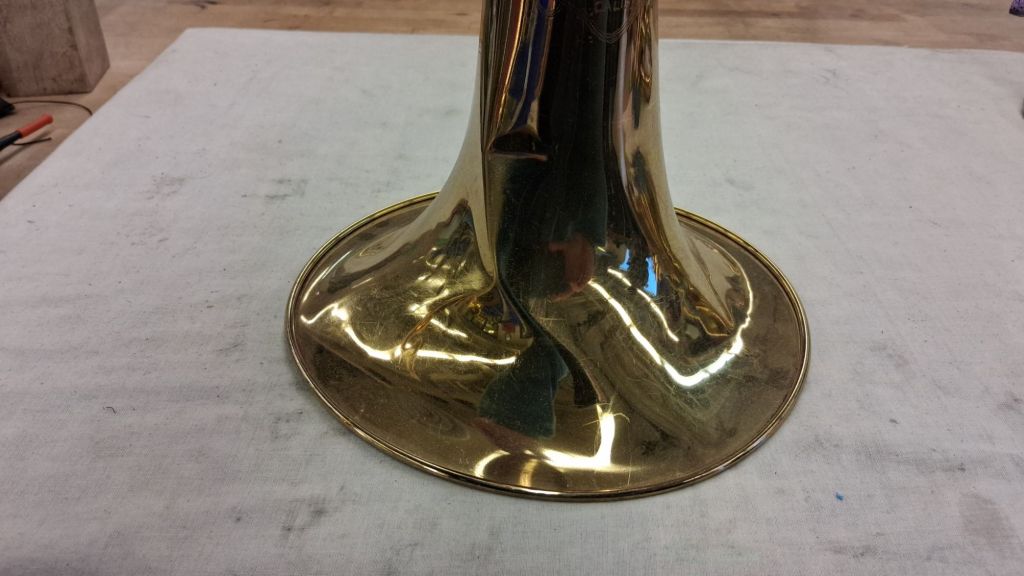
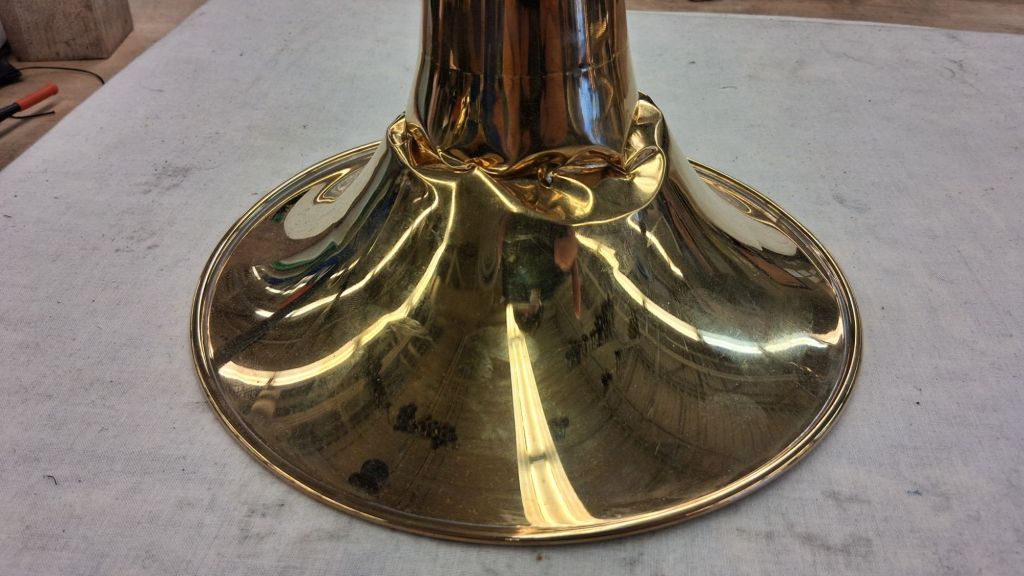
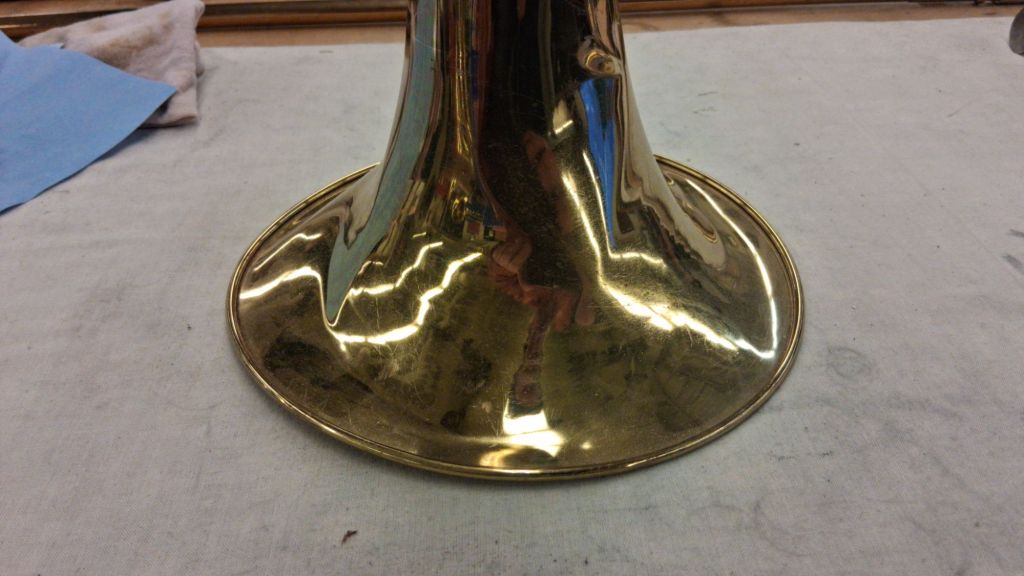
In regards to dent work on bells, we often categorize them into one of two groups: Folds and Buckles. A bell fold is when the instrument is dropped & the bell is displaced slightly as a result. A bell buckle is when the bell has essentially been crushed or “crunched” into itself. (See attached images below)
Identifying Dents
Sometimes just seeing the dents can be tricky. One way we can help identify dents in need of work is by using the reflections from the large, florescent lights in the lab. To do this, we want to stand parallel to the light & extend our bells an arm’s length. We can use the light to see imperfections on the inside of the bell as well! From here, we can rotate the bell slowly & observe the light hit the entire bell, which will also show pings as well.
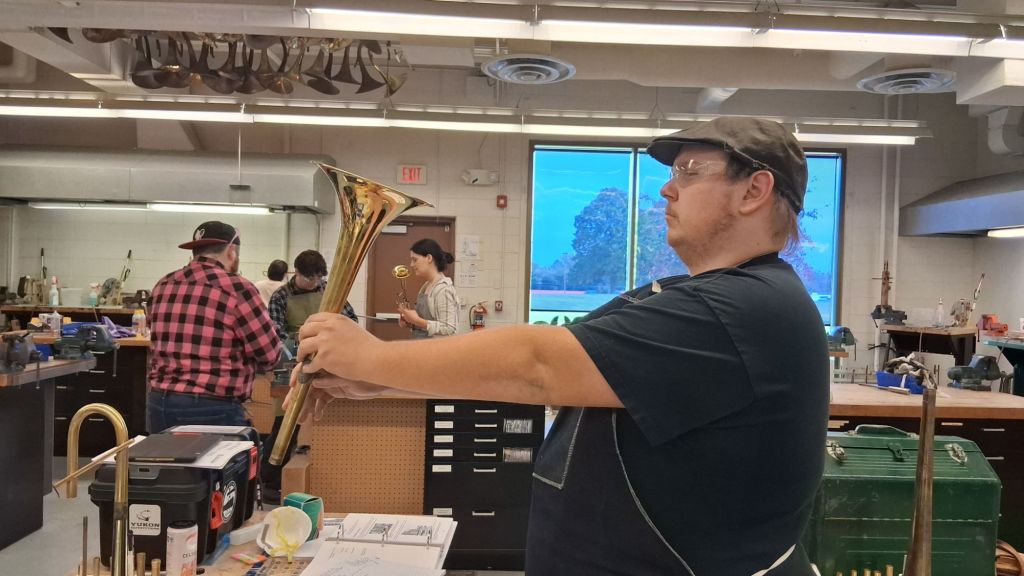
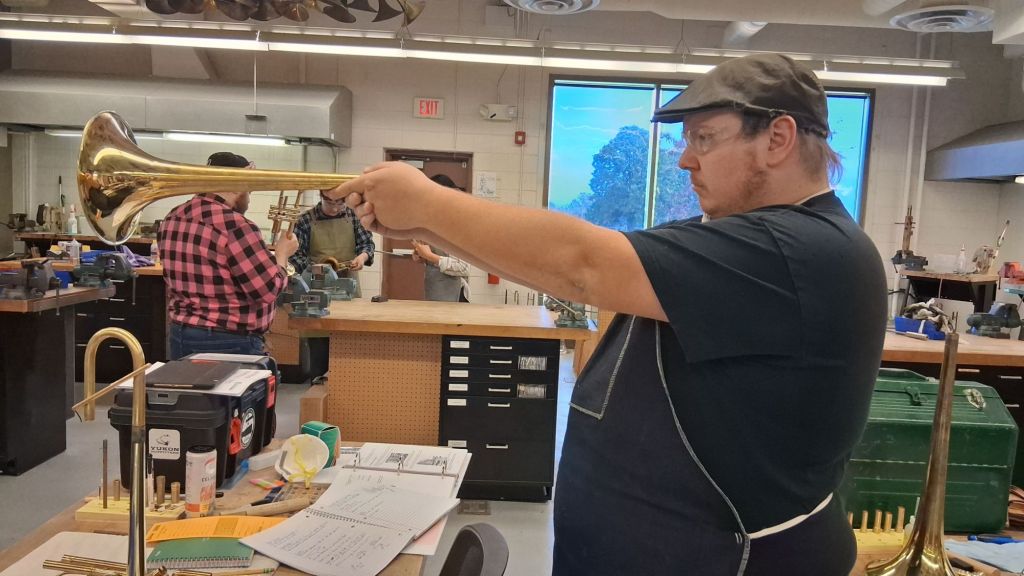
When damage is done to other parts of the horn, you may not need to use this specific technique. Some parts you can just see the damage, like on slides, crooks, & knuckles.
Working Dents
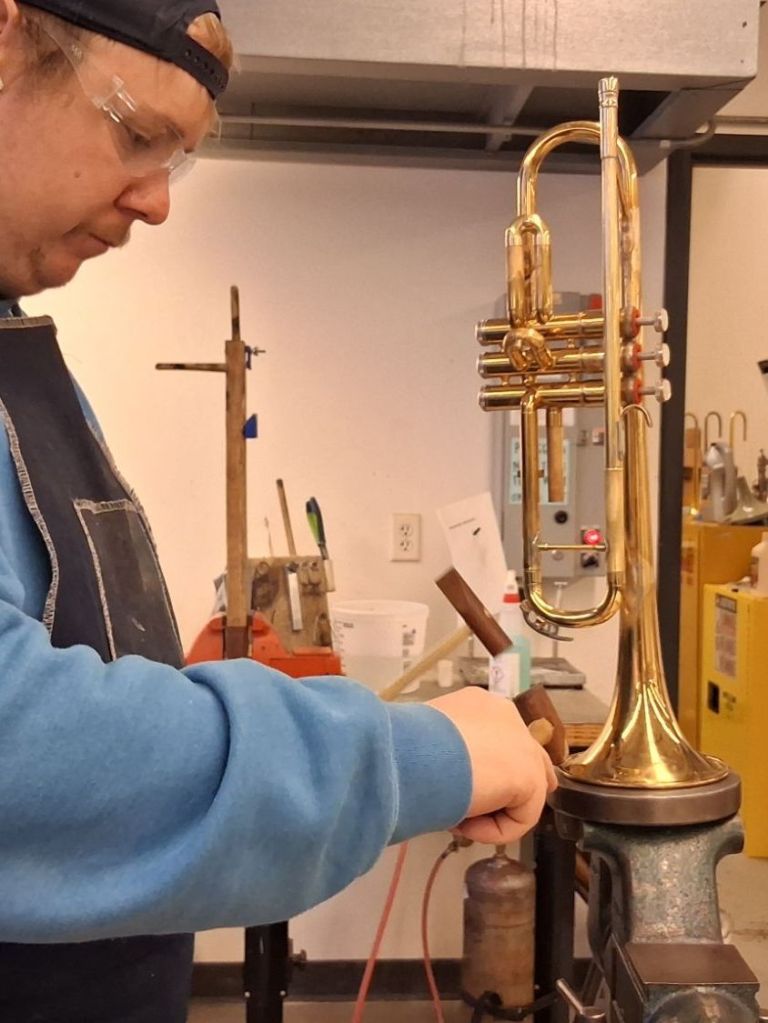
If it’s a bell fold, the difficulty can vary but are generally not too bad to deal with. You can usually just bend with your hands, then trace the damage on a roller.
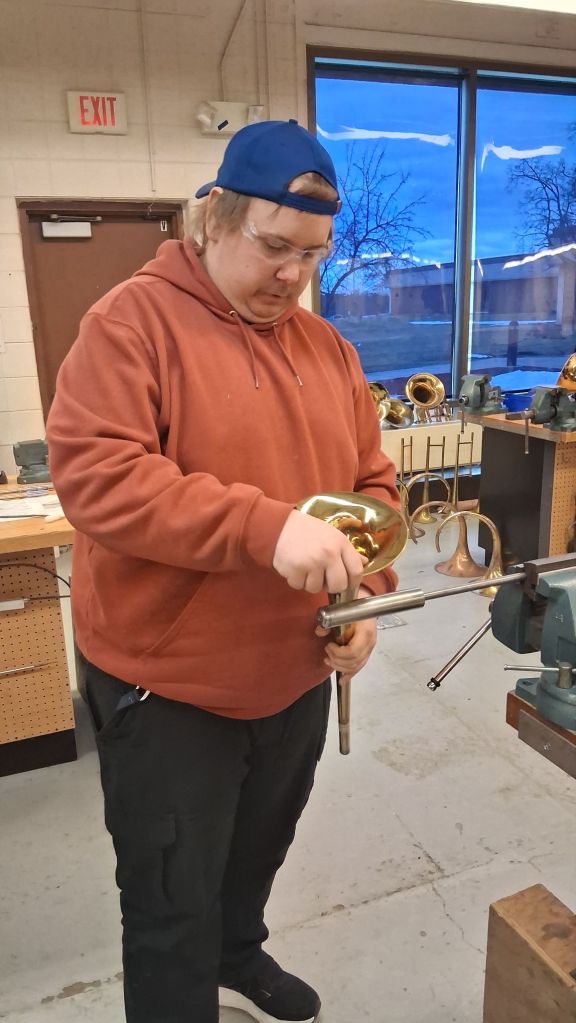
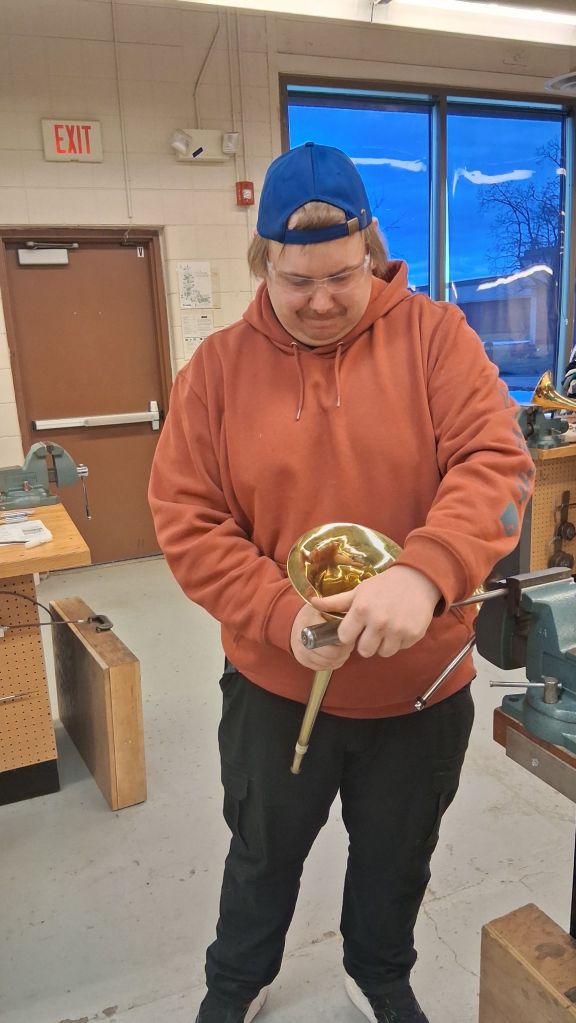
Bell pings can be tricky due to how sharp they can be & their location on the instrument. If they are close to the rim, you could use a combination of rawhide & canvas mallets on a bell flare mandrel.
Casing Dents
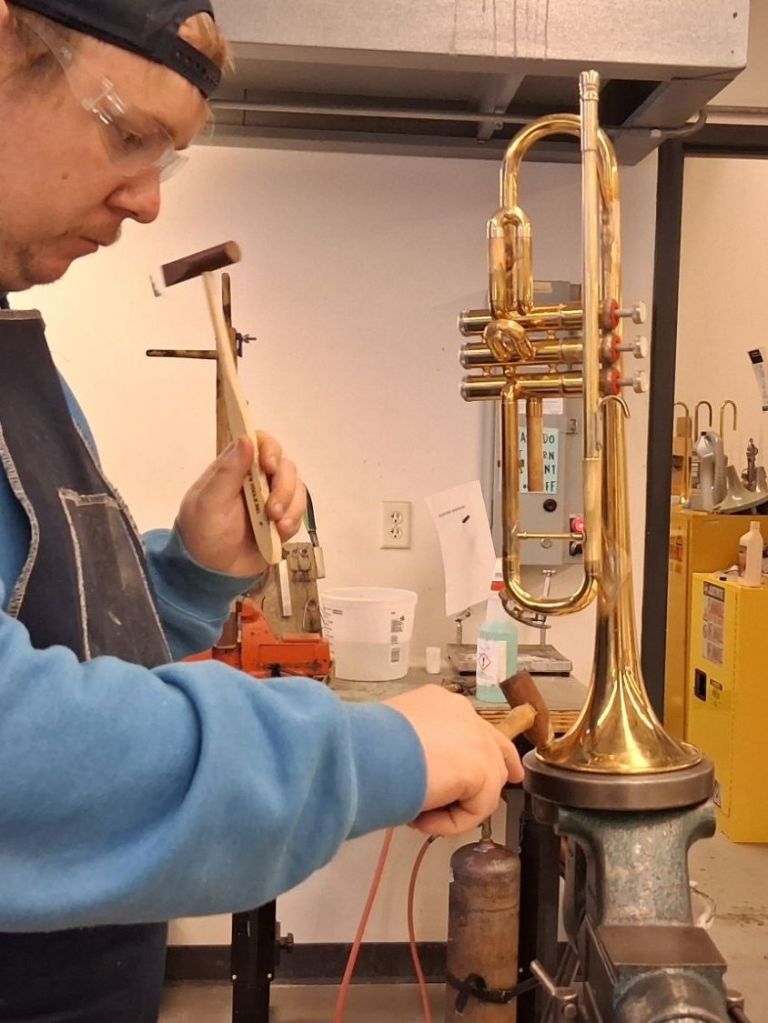
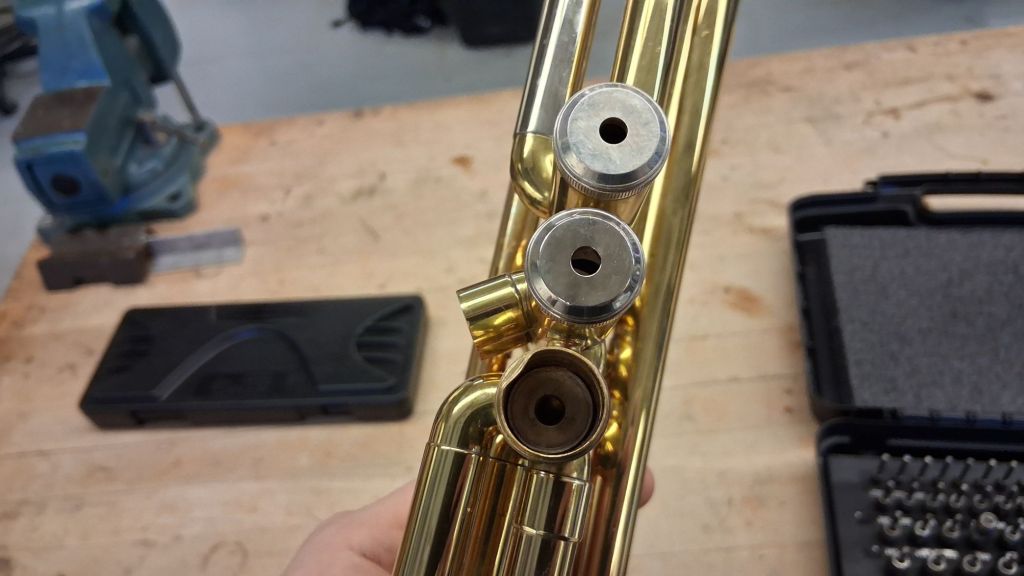
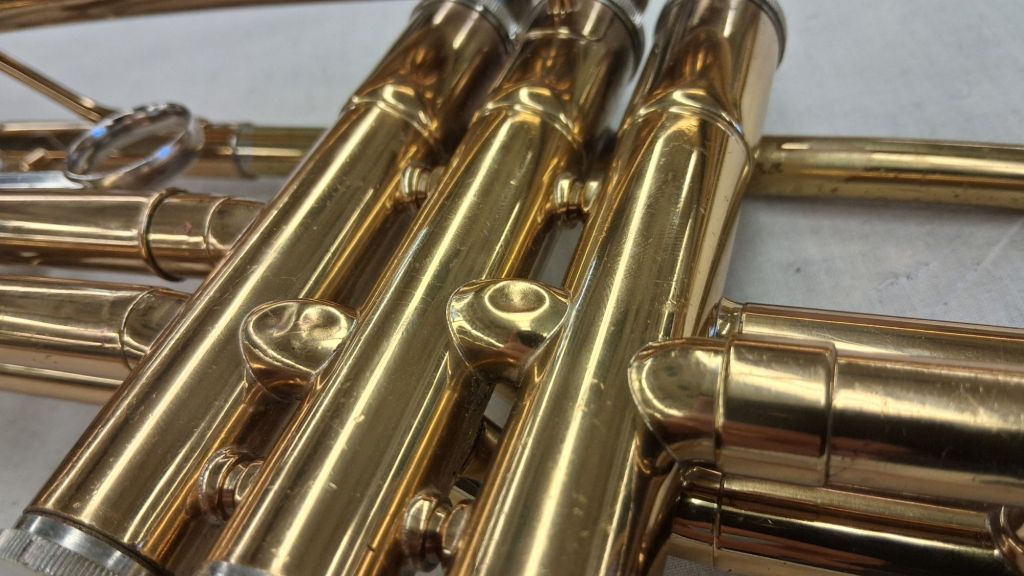
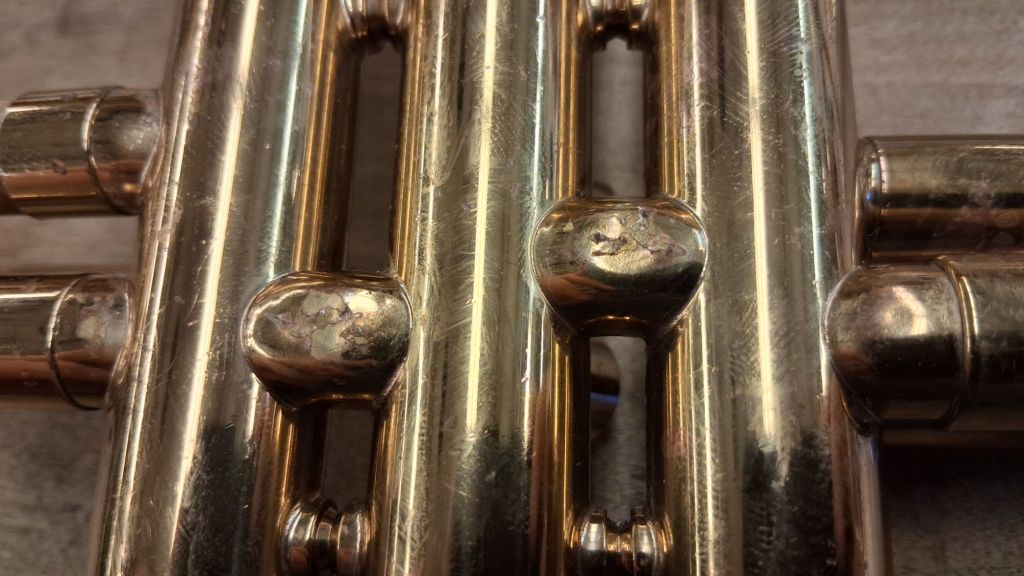
Dents on casings can affect the valve action, & could even damage the piston (which increases cost of repair). To fix, we use barrel balls from Ferree’s & tap into the damage. You may need to use multiple sizes of dent balls for this repair.
To fix the threads, there are a few steps required. If the initial thread is bent, you could bend it back using a thin, flathead screwdriver. We “chase” the threads by tapping with the canvas mallet in four spots, then continuing to screw on & tap until the cap is completely on.
Knuckle & 2nd Slide Dents
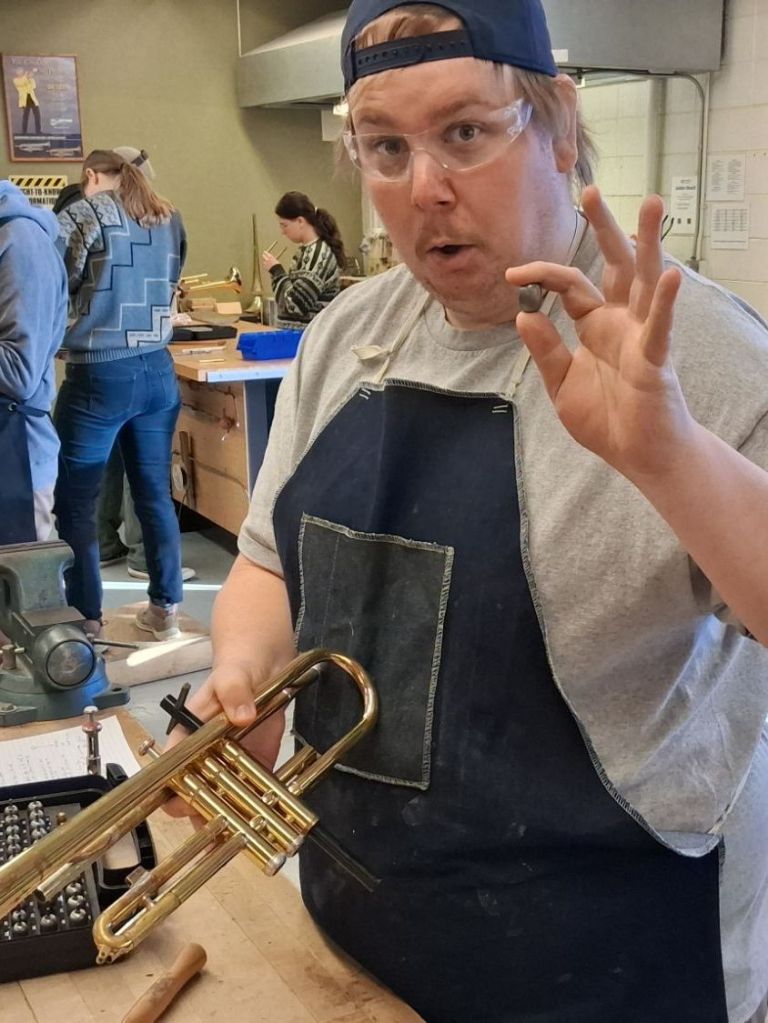
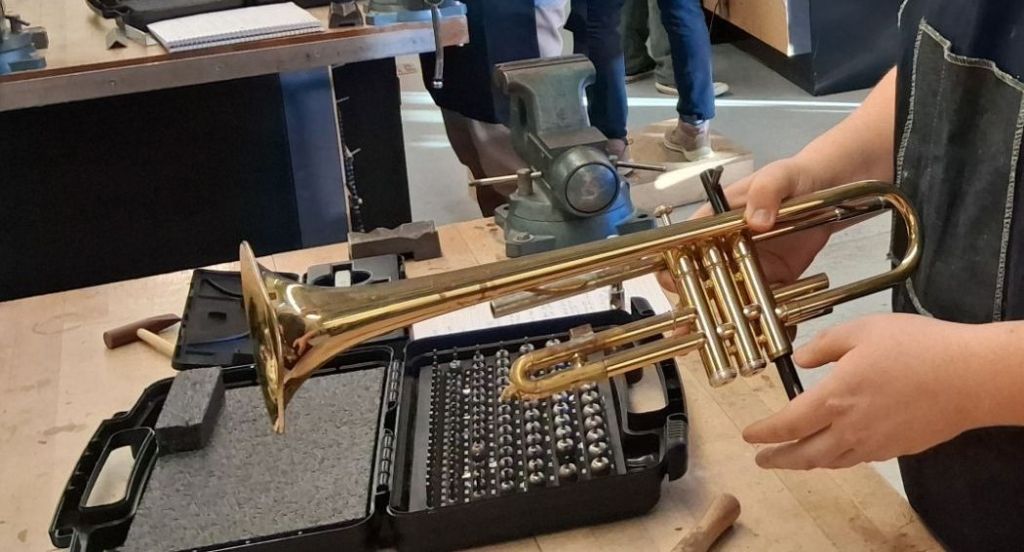
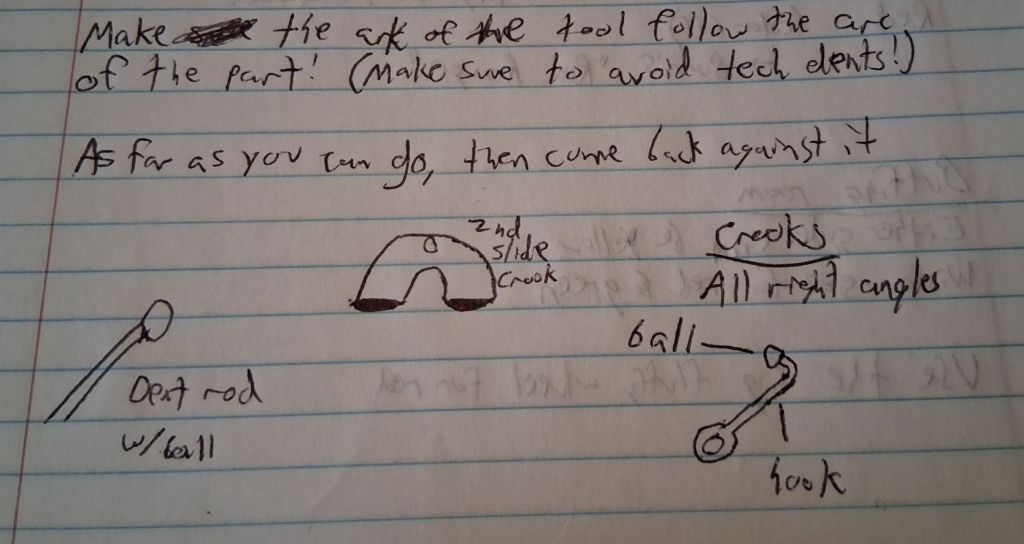
This one can be fun & rewarding to take out, but also could go sideways if done with the wrong tool or technique. We use a threaded dent rod with a ball on the end, sometimes one with a bent stem to accommodate for the angle. This is the same kind of tool setup we would need for 2nd slide crook dents as well.
Gooseneck Dents
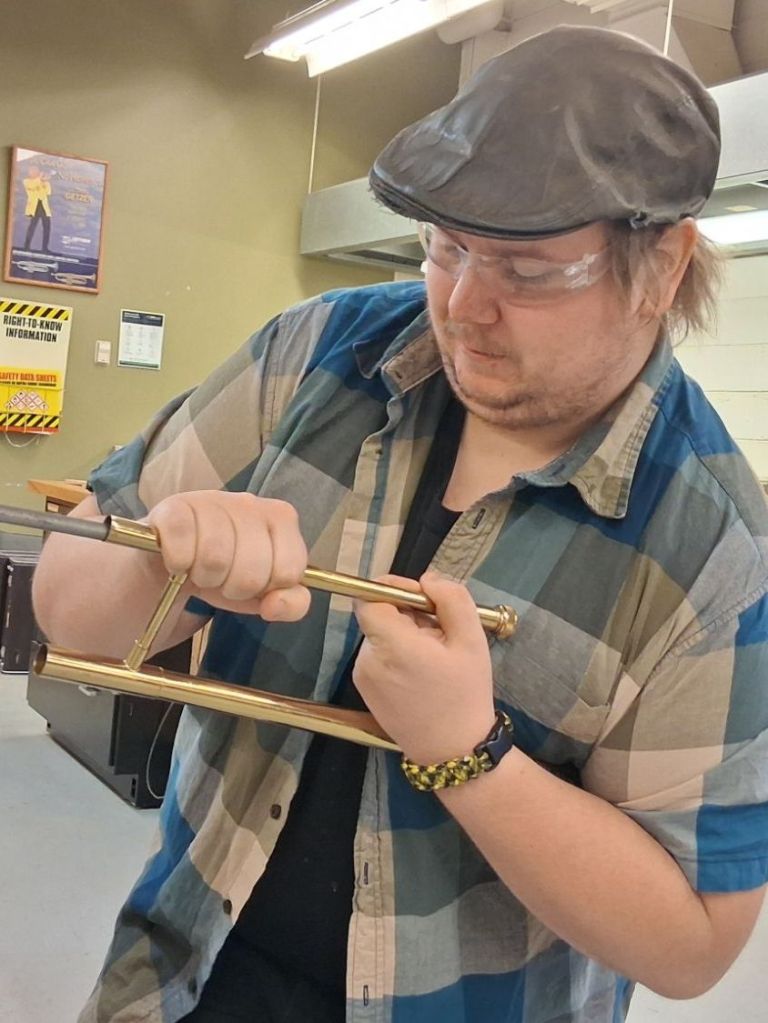
The trombone gooseneck can be tricky to work because of it’s curved nature. It can be very easy to overwork, then you’ll have to go back over it with a steel hammer & hollow tap it back down. You’ll want to grab a nosepicker & work it back up.
General Rules for Success
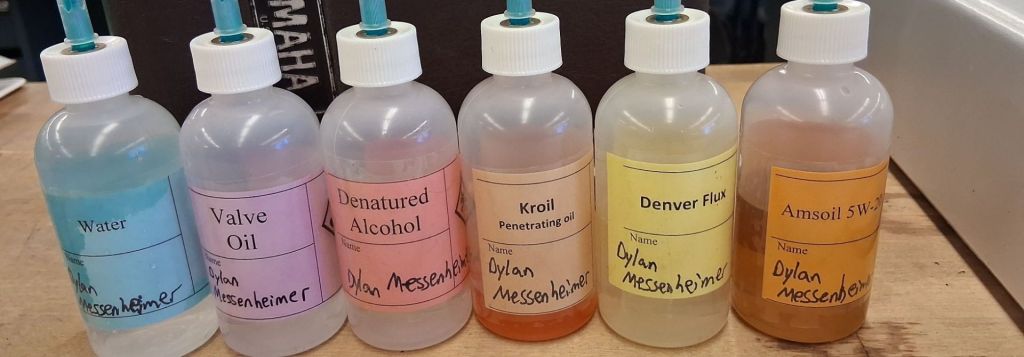
You want to use the best fitting dent ball that will maneuver around the dent. We also want to work any dent we have from up whenever we can. Don’t forget to use a lubricated solution on the dent balls to make sure we don’t tear the brass from the inside.
 DM Band Instrument Repair